
A state in Nigeria with the support of the Foreign Commonwealth and Development Office’s funded United Kingdom's Nigeria Infrastructure Facility (UKNIAF), managed by a Consortium that included Infrastructure Delivery International is assessing solutions to deal with the rising urbanisation in the some areas of the state. To resolve this problem the state has adopted Bus Rapid Transit with associated Transit Oriented Development projects to improve urbanised development in those areas.
According to the report produced by IDI for the UKNIAF programme which compared alternative fuels and their availability, Compressed Natural Gas (CNG) offered a cleaner burning alternative with several benefits such as reducing greenhouse gas emissions by 23% compared to diesel buses. This reduction is primarily due to lower carbon dioxide (CO2) emissions, a major contributor to climate change. Additionally, CNG buses emit significantly fewer nitrogen oxides (NOx) and particulate matter, both harmful air pollutants contributing to respiratory and other health issues.
While the initial investment in energy-efficient buses may be higher than conventional buses, lower operating costs and potential savings in fuel expenditure offer long-term financial benefits. Total lifecycle cost assessments show the economic viability of CNG buses.
The BMT Fast Track Scheme offers substantial emission savings over its operational lifespan. Estimates suggest a significant reduction in CO2 emissions, making the project eligible for Green Bond financing.
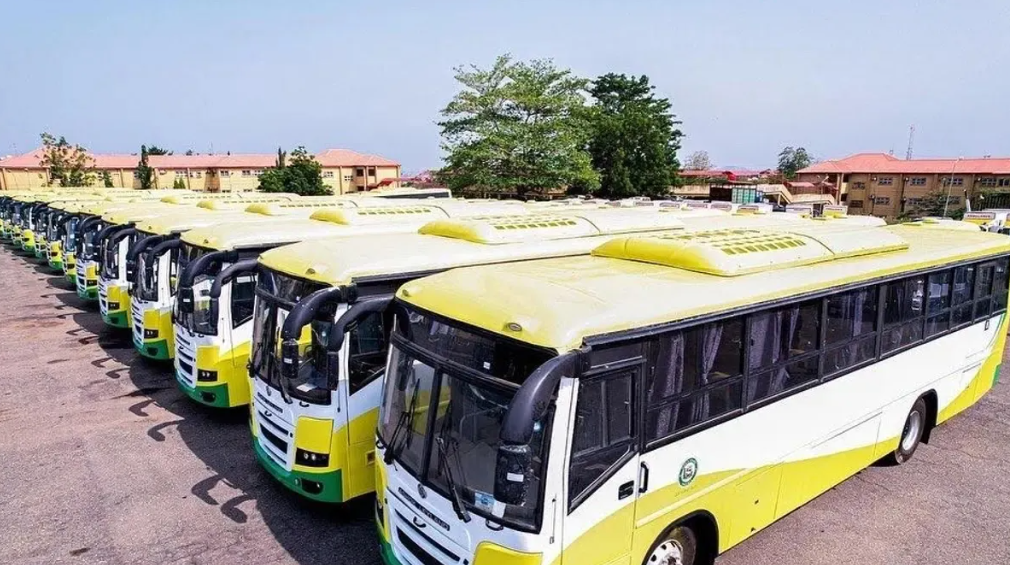
 Pic-CNG Buses for the fist phase implementation.
A strong project case
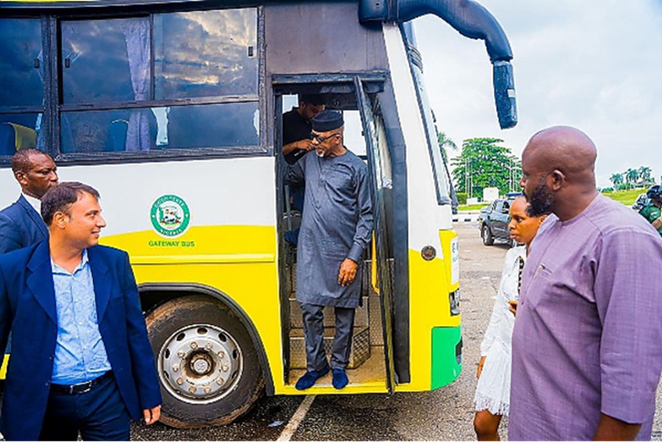
In October of 2023, the said state partnered with a company in a public-private partnership to deliver 15 CNG buses for the first phase of the project and deployed some of the CNG buses on the planned corridor. In November 2023, the state took a significant step towards green mobility with the planned construction of CNG bus stations around the state environs.
The CNG bus project is a significant step towards green mobility in Nigeria. By leveraging cleaner-burning CNG fuel and strategically planned infrastructure, this initiative has the potential to reduce greenhouse gas emissions, improve air quality, and enhance energy security.
By embracing innovative technologies and strategic planning, the project aims to deliver tangible benefits in terms of efficiency, environmental sustainability, and economic growth. As Nigeria continues its journey towards a cleaner and greener future, here at IDI, we continue to support the client state through UKNIAF.